


The Mona Lisa Banana: A Backyard Banana That Earns Its Space
Most banana plants sold for home gardens fall into one of two camps. There are the ornamentals that look fantastic and never give you anything to eat, and there are the fruiting types that shred, spot, and sulk the moment conditions aren't perfect. Mona Lisa sits in a more useful middle. It's a real dessert banana, it grows fast, and it was bred from the start to shrug off the leaf disease that wrecks a lot of banana plants.
Here's what it is, how to grow it, and what to realistically expect.
Where Mona Lisa comes from
Mona Lisa is the trade name for FHIA-02, a hybrid developed by the Honduran Agricultural Research Foundation (FHIA). The breeders were going after a specific problem: black Sigatoka, also called black leaf streak. It's a fungal disease that streaks and kills banana leaves, and commercial growers normally spray fungicide over and over to keep it in check.
FHIA-02 is rated highly resistant to black leaf streak and resistant to its milder cousin, yellow Sigatoka. Its parentage is believed to include Williams, a Cavendish type, so the fruit is a sweet, familiar dessert banana rather than a starchy cooker. The fingers run a little shorter than the ones at the grocery store.
For a backyard grower, that disease resistance shows up as something you can see: leaves that stay green and clean longer through a humid summer. In South Florida or along the Gulf Coast, that's the difference between a plant that looks lush in August and one covered in brown streaks.
One honest caveat. Mona Lisa is not resistant to Panama disease (Fusarium wilt), and Australian field trials rated it susceptible. The practical takeaway is simple: don't plant it where a banana has already died of wilt, and start with clean nursery stock instead of a pup from a neighbor's struggling clump.
What it looks like in the garden
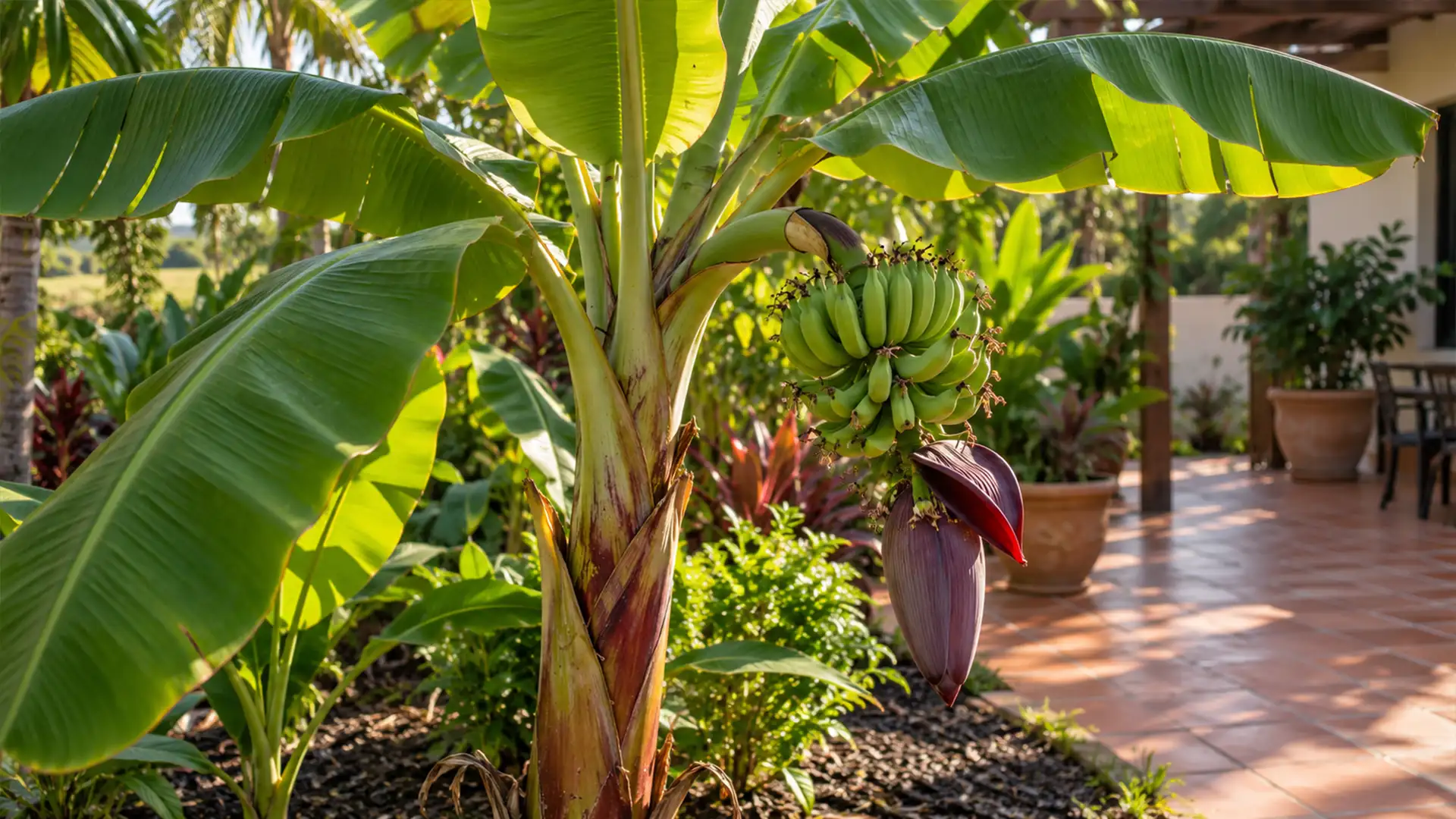
At maturity, expect a plant 7 to 12 feet tall and 8 to 10 feet across. The leaves are big green paddles, and the trunk (technically a pseudostem, made of tightly wrapped leaf bases) often carries a reddish tint. When it flowers, a heavy red-purple bud drops down on a stalk, with the young banana hands forming above it.
Treat it like a small tree when you're choosing a spot, not a shrub. It's a great anchor for a tropical border, a privacy screen along a fence, or the centerpiece of an edible landscape. Just don't tuck it three feet from the house and hope.
How to grow it
Sun. Full sun, six to eight hours a day at minimum. A banana in partial shade will give you leaves. A banana in full sun gives you leaves and fruit.
Soil. Rich, loose, and well drained. Mona Lisa handles average garden soil fine, but heavy clay that stays wet will rot the roots. If your yard holds water, work in plenty of compost or plant on a slight mound.
Water. A lot, and consistently. Bananas are thirsty plants with big leaves losing water all day. Water deeply and keep the soil evenly moist through summer, but never let the plant sit in standing water. A thick layer of mulch over the root zone makes this much easier.
Feeding. This is where people underestimate bananas. Mona Lisa isn't fussy, but it is hungry. Use a balanced fertilizer that's rich in potassium regularly through the growing season. Potassium is what bananas lean on for fruit, and a pale, slow plant is often just an underfed one.
Cleanup. Pull off dead or wind-torn leaves as needed. Each pseudostem flowers and fruits only once, so after you harvest, cut that stalk down to the ground. The pups (suckers) coming up around the base will take over. Most growers keep one main stalk and one or two followers and remove the rest, so the plant puts its energy into fruit instead of a crowd of stems.
How long until you get bananas?
This is the question everyone asks, so here's a straight answer: longer than you'd hope. In research trials, FHIA-02 averaged about a year from planting to flowering and around 16 to 17 months from planting to harvest. Those numbers come from warm, tropical field conditions. In zone 9, where winters slow growth to a crawl, plan on it taking longer.
Once the bunch forms, leave it on the plant until the fingers fill out and look plump and rounded. Then cut the whole bunch and let it ripen indoors.
The good news is that the wait gets shorter after the first crop. Those pups are already growing while the first stalk fruits, so an established clump can keep producing season after season.
Zones, cold, and containers
Mona Lisa is a perennial in USDA zones 9 through 11. In the warmest parts of that range it grows nearly year-round. In zone 9, frost will burn the leaves and a hard freeze can knock the top down, but a well-mulched root base usually pushes new growth in spring.
Outside those zones, grow it in a large container and bring it indoors before the first frost. Start in something modest and move up in pot size as it grows, eventually working toward a container in the 15 to 20 gallon range. Overwinter it in your brightest room and cut back on water while it rests.
Be realistic about fruit here. Given how long Mona Lisa takes to flower, a plant that spends half the year indoors is mostly a foliage plant. It's a spectacular one, and the leaves alone make a patio feel like somewhere else, but treat any bananas as a bonus.
It's also pet safe, which matters if you've got a dog who investigates everything you plant.
Getting a young plant off to a good start
Mona Lisa from Blossomdale ships as a young plant in a 4-inch nursery pot. When it arrives, leave it in that pot for one to two weeks in a bright spot, out of harsh afternoon sun, and keep it watered. Shipping is stressful, and giving the roots time to settle before repotting or planting pays off.
After that, either pot it up one size or plant it in the ground once nights stay warm. Young bananas grow quickly in summer heat, so don't be surprised if it outgrows its first pot in a matter of weeks.
If you want a fuller look sooner, or you're planning a screen, the multi-packs make sense. Three or four plants spaced along a fence fill in a lot faster than one.
Is it worth it?
If you live in zones 9 to 11 and want a banana that actually produces edible fruit without turning into a leaf-spot project every summer, Mona Lisa is one of the better choices you can make. If you're in a colder zone, it's still a gorgeous, fast-growing container plant, as long as you know going in that fruit is a long shot.
Either way, give it sun, water, and food, and it'll do the rest.

Comments
No comments yet. Be the first.