


The Mona Lisa Banana: A Backyard Banana That Pulls Its Weight
Here's the dirty secret of home banana growing. A lot of people buy a banana plant, get a gorgeous clump of leaves, and never see a single banana.
Sometimes that's the climate. Sometimes it's care. But often it's the variety. Plenty of bananas sold for gardens are ornamentals first and fruiters a distant second.
The Mona Lisa banana is different. It was bred to be a working banana, one that stands up to disease and still produces fruit worth eating. For gardeners with sun, warmth and a hose, it's one of the more rewarding bananas to put in the ground.
What Exactly Is the Mona Lisa Banana?
It's sold under a few names: Mona Lisa, Musa 'Mona Lisa', Honduran banana, or its breeding code, FHIA-02. They're all the same plant.
The FHIA part refers to the Honduran Foundation for Agricultural Research, a breeding program that spent decades developing bananas able to hold up against the fungal diseases that tear through tropical plantings. Mona Lisa is one of the results. That breeding is the whole point of this plant. Growers get a banana that's tougher than average without giving up the fruit.
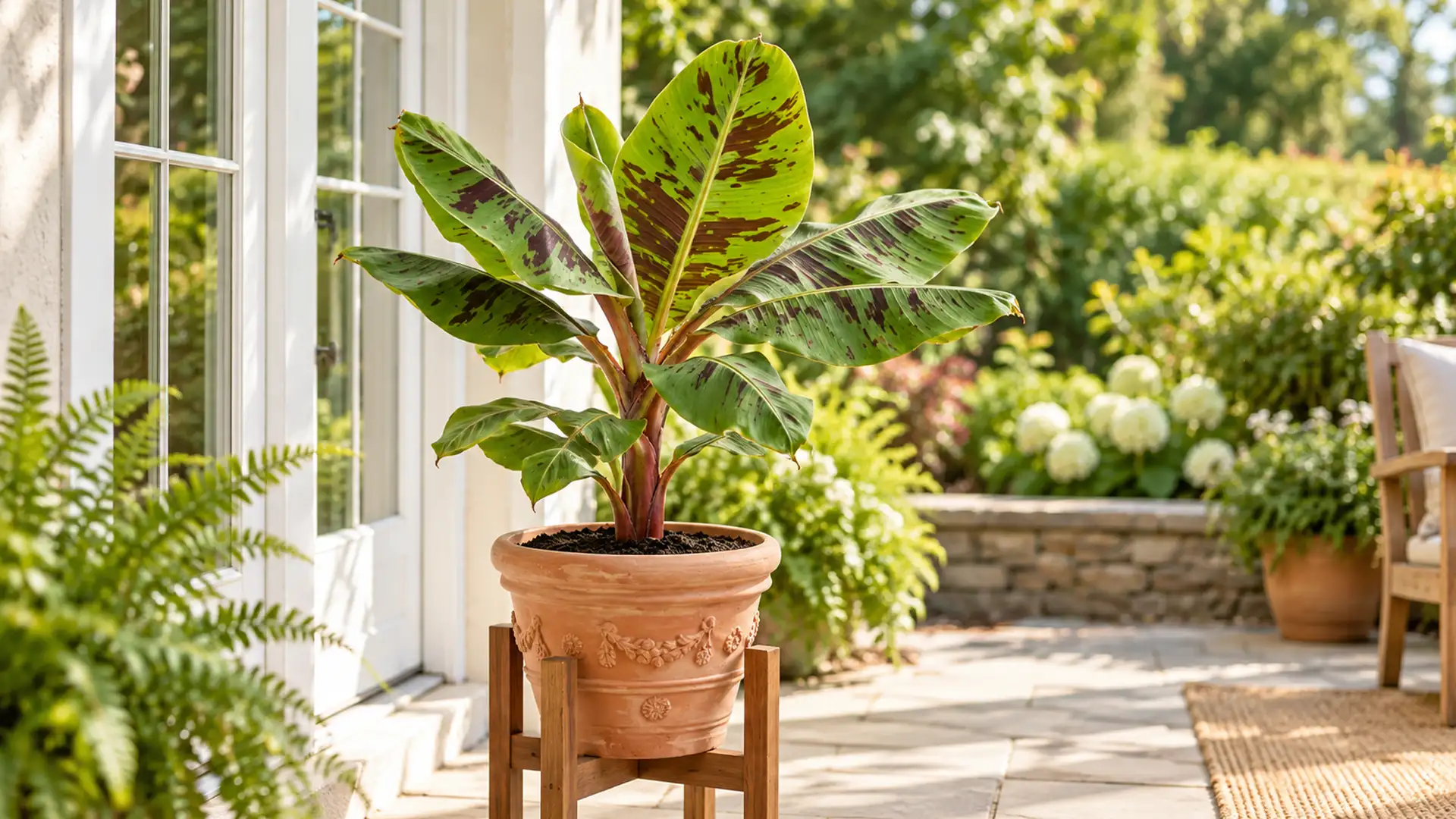
It also looks the part. The pseudostems (what most people call the trunk) carry a reddish tint, and the leaves are big green paddles that make a bed look tropical almost overnight.
A quick reality check on size: Mona Lisa is not a dwarf. It reaches 7 to 12 feet tall and 8 to 10 feet wide at maturity. Anyone looking for a banana for a small pot on the patio is better served by the Truly Tiny banana. Mona Lisa is for gardens with room to let it stretch.
What About the Bananas?
Mona Lisa produces dessert bananas with a mild, sweet flavor. Think fresh-eating banana, not starchy cooking plantain.
A second plant isn't needed for fruit. Bananas set fruit without pollination, so one healthy plant is enough. The red and green flower stalk usually shows up in spring or summer, and bees and birds will visit it.
Patience matters here. Like most bananas, a young plant needs to bulk up before it flowers. In a warm climate with steady water and feeding, that's usually somewhere around a year or more from a small start. The bunch then takes a few more months to fill out. Plants in pots or cooler areas take longer, so fruit is best treated as the reward for good care, not a guarantee in year one.
How to Grow Mona Lisa (and Actually Get Fruit)
None of this is complicated. Bananas just want a lot of the basics, consistently.
Sun. Mona Lisa needs 6 to 8 hours of direct sun a day. This is the one corner that can't be cut. A banana in shade will grow leaves, but it's far less likely to fruit.
Soil. Rich, loose, well-drained soil is ideal, and compost worked into the planting hole gives it a strong start. Average garden soil is fine if it drains. Heavy clay that stays wet is the problem, because soggy roots rot.
Water. Bananas are thirsty. Deep, frequent watering keeps the soil evenly moist, which matters most in summer heat. Moist is the goal, not swampy. If water pools around the base after rain, the spot is too wet, and a raised mound or a better-drained location solves it.
Feeding. This is where most growers fall short. Bananas are heavy feeders and do best on a balanced, potassium-rich fertilizer applied regularly through the growing season. Potassium is what fuels flowering and fruit.
Cold. Mona Lisa is perennial in USDA zones 9 to 11 and handles summer heat past 100°F. It's not built for cold. Around 40°F is its comfort floor, so ahead of a cold night, in-ground plants should be covered and container plants moved inside.
Growing it in a container
Outside zones 9 to 11, Mona Lisa works well in a big pot as a summer showpiece. It does better moved up through pot sizes in stages than dropped from a small start into a huge container. Once nights head toward the 40s, it can come indoors to a bright room, with less water until spring. It makes a pretty impressive houseplant for the winter.
Pruning and pups
Dead or wind-shredded leaves can be trimmed off any time. Torn leaves are normal for bananas and don't hurt the plant.
Each stem fruits only once. After harvest, that stem gets cut down to the ground. The pups (new shoots at the base) take over and carry the next crop.
When the plant arrives
Mona Lisa ships as a young start in a 4-inch pot. It needs 1 to 2 weeks to settle in before repotting or planting out. The plant is recovering from the trip, and a little patience here pays off later.
Who Should Grow Mona Lisa?
It's a strong pick for gardeners who:
Live in zones 9 to 11 and want a banana that fruits, not just one that looks nice
Have a sunny spot with room for a plant that can top 10 feet
Want an edible landscape plant that also works as a bold focal point
Have pets, since the plant is listed as pet safe
It's probably not the right fit for a shady yard or a small balcony. In those spaces, a compact variety like Truly Tiny or an ornamental like Red Dacca is the better choice.
Getting a Mona Lisa Started
The Musa 'Mona Lisa' Banana ships from Blossomdale in a 4-inch pot for $24.99, usually within 2 business days. For anyone planning a full banana bed or a privacy screen, the multi-packs take up to 24% off the per-plant price, and orders over $99 ship free.
Planted in full sun, kept fed and watered, and given time, Mona Lisa does the rest.

Comments
No comments yet. Be the first.