


Every Banana You Buy Was Scheduled
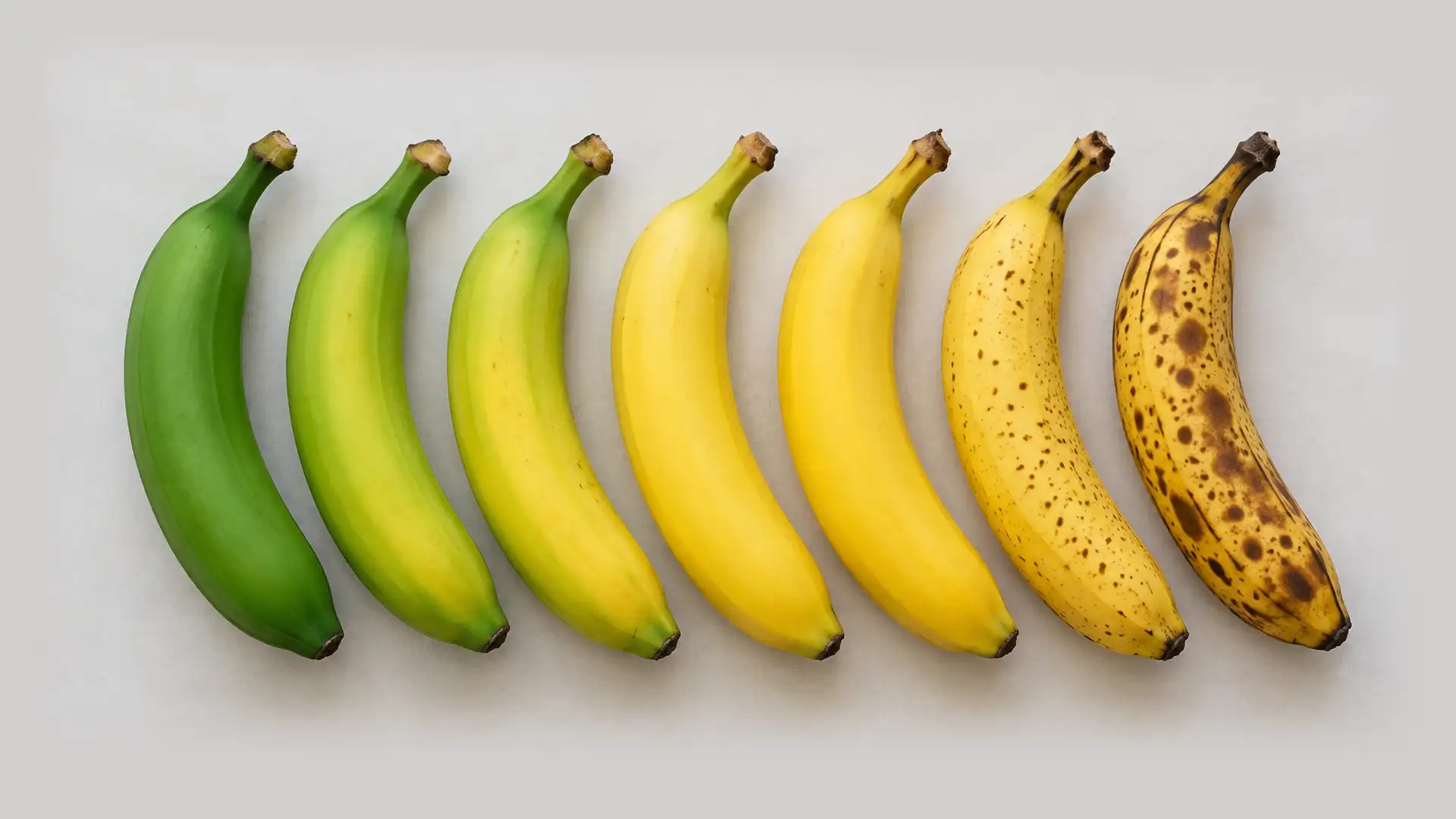
The bananas in your fruit bowl were cut while they were rock hard and completely green, often a couple of weeks and a few thousand miles before they reached your kitchen. Somewhere along the way, someone decided exactly how yellow they'd be when the store put them out.
That decision runs on a surprisingly low-tech tool: a seven-stage peel color chart. Growers, shippers, ripening facilities and produce managers all use it. Ask for "color 3" and everyone in the chain knows you mean a banana that's still more green than yellow.
Here's how the scale works, why the industry depends on it, and how you can use it to buy better bananas.
The seven stages
The chart tracks one thing: how much of the peel has turned from green to yellow. Underneath, the fruit is changing just as fast, as starch turns to sugar and the flesh softens.
| Stage | What the peel looks like | What’s happening inside |
|---|---|---|
| 1 | All green | Hard and starchy, barely sweet. This is how bananas are harvested and shipped. |
| 2 | Green with a trace of yellow | Ripening has just switched on. |
| 3 | More green than yellow | Still firm, with a mild sweetness starting to show. |
| 4 | More yellow than green | Softening and getting noticeably sweeter. |
| 5 | Yellow with green tips | Almost there. Firm bite, bright flavor. |
| 6 | Fully yellow | Sweet, soft and easy to peel. Peak eating for most people. |
| 7 | Yellow with brown flecks | The sweetest and most fragrant stage. Most of the starch is now sugar. |
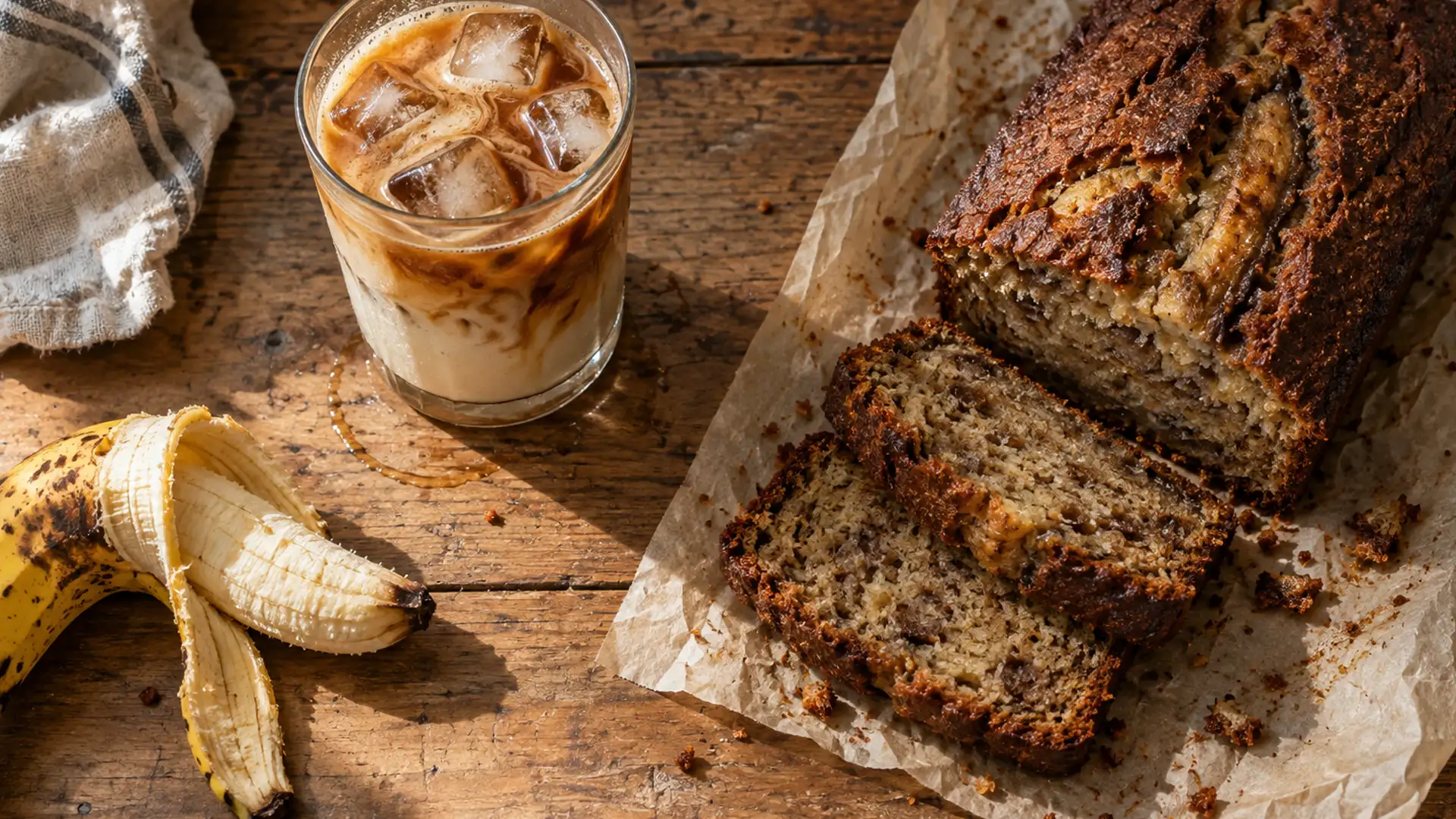
Those brown flecks at stage 7 are often called sugar spots. Past that point, the commercial chart mostly loses interest. Heavily spotted and black-peeled bananas are off the scale, but they're exactly what you want for banana bread.
How the chart runs the supply chain
Bananas are picked at stage 1 for a practical reason: a ripe banana would never survive the trip. They cross the ocean in refrigerated containers kept at around 13 to 14°C (56 to 58°F). That's cold enough to hold ripening on pause, but not so cold that the peel gets chilling damage.
When they land, the fruit goes into ripening rooms. These are sealed chambers where distributors release ethylene gas, the same ripening hormone bananas make on their own, and tightly control temperature and humidity. A typical cycle runs about four to eight days. Warmer rooms speed things up, and cooler rooms slow them down.
This is where the color chart earns its keep. A produce buyer doesn't just order bananas. They order bananas at a specific stage for a specific day. If a store wants fruit arriving at stage 3 on Thursday, the ripening facility works backward and sets the room's program to hit that target.
Get it wrong and the store loses either way. Bananas that arrive too green sit on the shelf while shoppers pass them by. Bananas that arrive too yellow turn spotty before the weekend and end up marked down or thrown out.
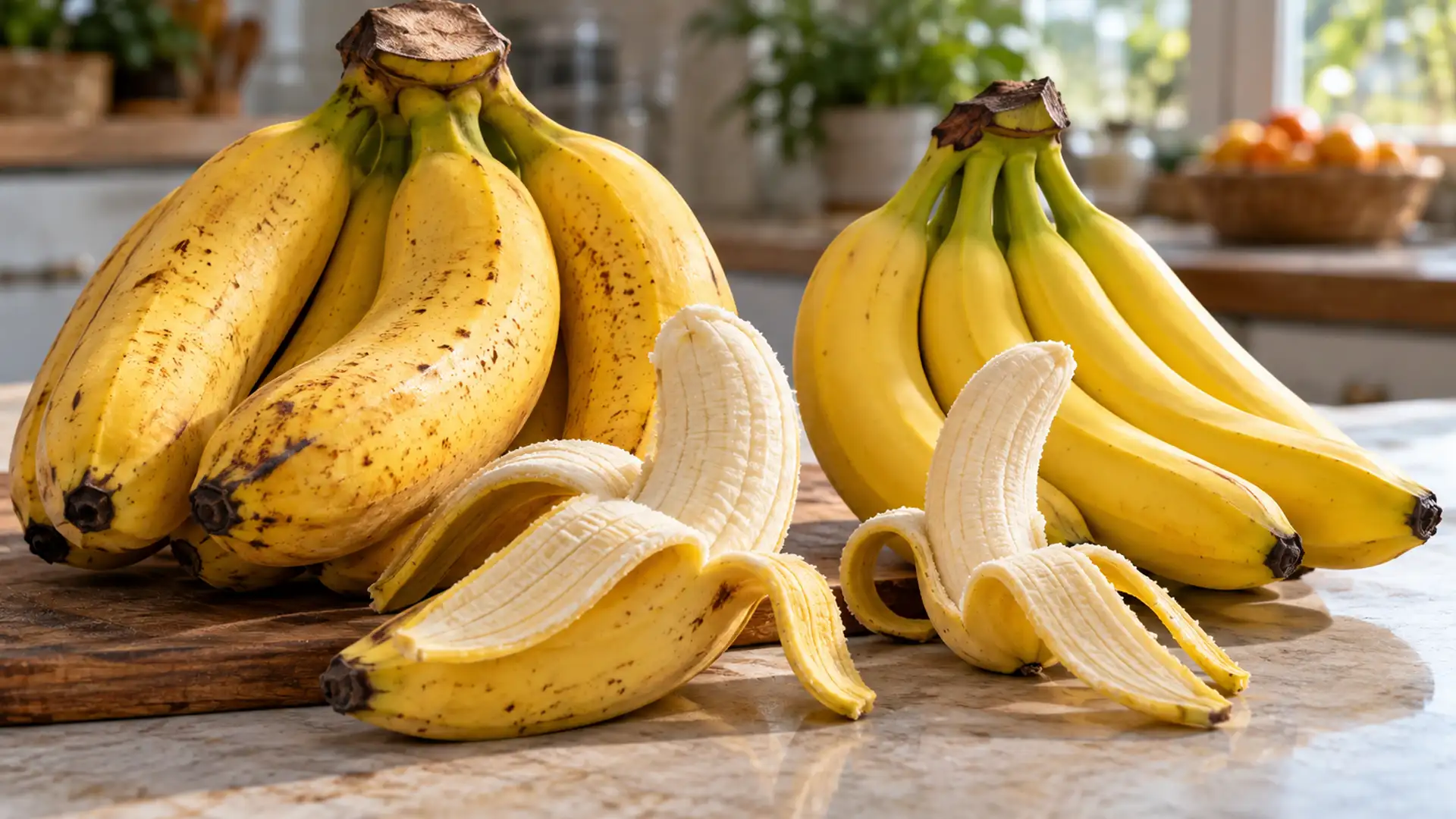
Most supermarkets aim to receive bananas around stage 3 or 4. That way they turn yellow on the shelf and still give shoppers a few good days at home. Shops that sell bananas for eating on the spot, like cafés and convenience stores, tend to want them further along.
Using the chart in your own kitchen
Once you know the stages, you can shop for the whole week instead of the next two days. Grab a few at stage 6 to eat now and a couple at stage 3 or 4 that will catch up by midweek.
Each stage also suits a different job:
Stages 1 and 2: Cook them. Green bananas behave more like a potato than a fruit, which is why they show up in curries, fried chips and green banana flour.
Stages 3 and 4: Slice them. Firm fruit holds its shape in salads and on cereal, and it's lower in sugar than a fully ripe banana.
Stages 5 and 6: Eat them as is, or blend them into smoothies.
Stage 7 and beyond: Bake with them. Spotty bananas mash easily and bring the most sugar and banana flavor to bread, muffins, pancakes and pudding.
Want to move a banana along faster? Put it in a paper bag with an apple or another banana to trap the ethylene. Want to slow it down? Once it hits the stage you like, move it to the fridge. The peel will darken, but the fruit inside stays good for several more days.
Read the peel
A banana peel is basically a countdown clock, and an entire global industry is built around reading it. Next time you're in the produce aisle, check the bunch against the chart. You'll know exactly how many days you have, and what each banana is best for when its moment comes.

Comments
No comments yet. Be the first.