The Banana You Know Is A Backup
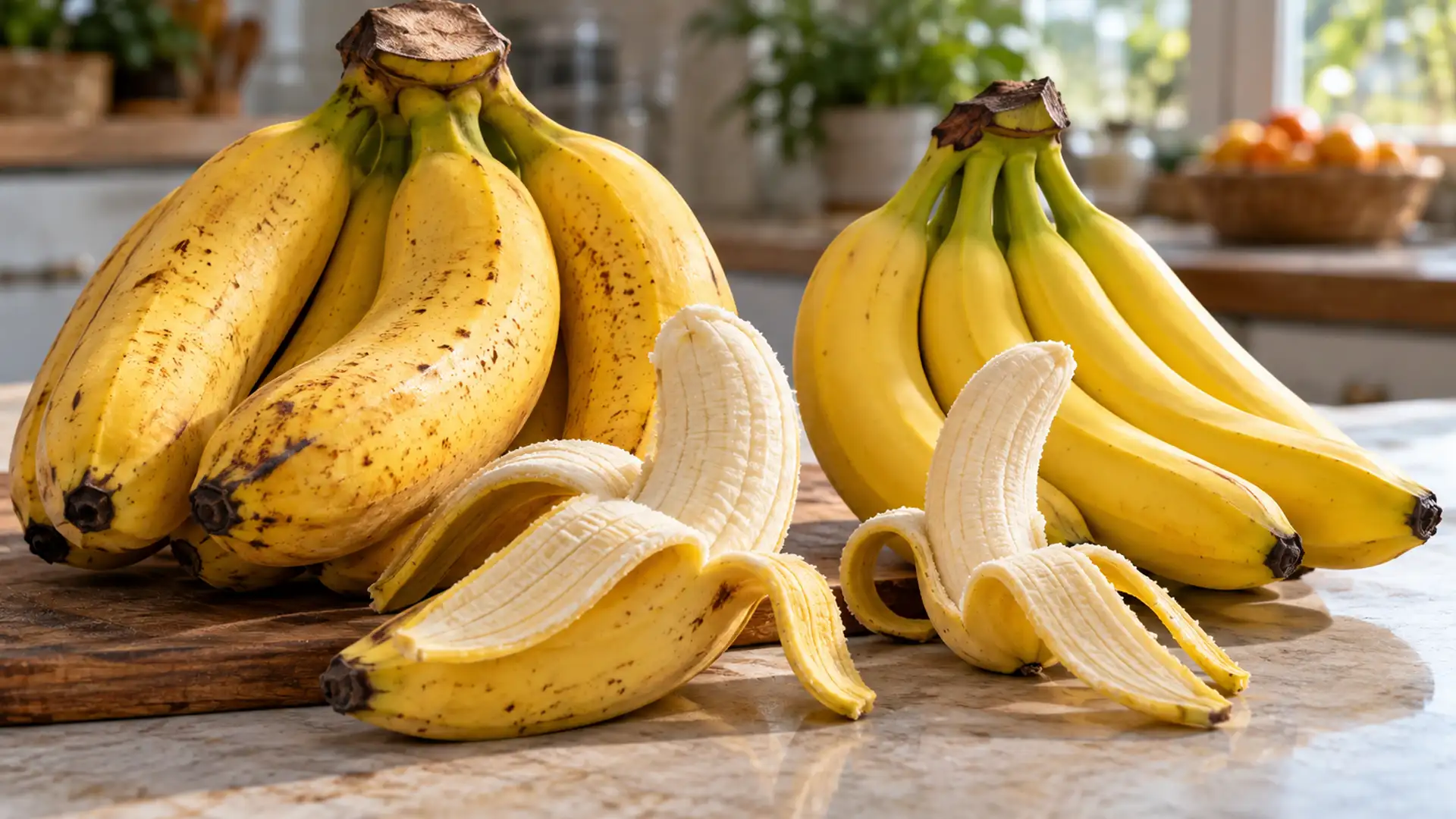
That yellow banana sitting on your counter? It's the understudy.
For the first half of the 20th century, the banana most Americans and Europeans peeled was a different fruit entirely. It was bigger, creamier, and by most accounts it tasted better. Its name was Gros Michel. The people who grew and shipped it just called it Big Mike.
If your grandparents ever told you bananas "used to taste different," they weren't being nostalgic. They were right.
So what was Big Mike like?
People who've eaten both describe the Gros Michel as sweeter and more aromatic than a Cavendish. The flesh is denser and creamier, closer to custard than to the slightly starchy bite you get from a supermarket banana. The flavor is often compared to banana bread or a hint of rum.
It was also a big fruit. Long, plump fingers grew in tight, heavy bunches that looked impressive on a market stall.
But flavor alone didn't make it king. Plenty of fruits taste great and never leave the farm. What set Big Mike apart was its skin.
A peel built for the long haul
Bananas are fragile. They bruise when you look at them wrong, and they ripen on their own schedule. Moving millions of them from plantations in Central America and the Caribbean to cities thousands of miles away was a logistics nightmare.
The Gros Michel made that nightmare manageable. Its thick, tough peel shrugged off rough handling. Growers could cut whole stems, stack them in the holds of steamships, and unload them at the other end with little damage. No padded boxes. No careful packing.
That durability is a big reason companies like United Fruit could turn bananas from an exotic luxury into one of the cheapest fruits in the grocery store. Big Mike didn't just taste good. It traveled well, and in the export business, that's what matters most.
There was one catch. Every Gros Michel plant was essentially a clone of the others.
The fungus that took down a king
Commercial bananas don't grow from seed. They're propagated from cuttings, which means every plant on a plantation is genetically identical. That's great for consistency. It's terrible when something comes along that can kill one plant, because it can kill all of them.
That something was Panama disease, a soil fungus (Fusarium oxysporum, now known as Race 1) that gets into a banana plant's roots and chokes off its water supply. The leaves yellow, the plant wilts, and it dies. Worse, the fungus lingers in the soil for decades, so you can't just replant.
The disease showed up on plantations in the late 1800s and spread through the early 1900s. Growers did what they could. They abandoned infected land and cleared fresh rainforest for new farms, but the fungus kept following them. It moved on boots, tools, water, and soil clinging to plant material.
By the 1950s, the Gros Michel export trade was collapsing. The industry needed a replacement, and fast.
Enter the Cavendish, the compromise pick
The Cavendish had one huge thing going for it: Race 1 couldn't touch it. Growers could plant it right back into infected soil and get a healthy crop.
Everything else about it was a step down. The flavor was milder. The flesh was less creamy. And the peel was thinner and bruised easily, which meant the old method of tossing whole stems into a ship's hold was out. The industry had to change how it worked, cutting bananas into smaller hands, packing them in boxes, and controlling ripening with temperature and ethylene gas once they arrived.
It was a lot of new cost and hassle for a fruit that most people agreed wasn't as good. But it was this or nothing. Through the late 1950s and into the 1960s, the big exporters made the switch, and the Cavendish became the banana nearly everyone in the West has eaten since.
Most shoppers never noticed the handoff. The fruit was still yellow, still curved, still called a banana.
Is banana candy really Big Mike flavored?
You've probably heard this one: artificial banana flavor tastes nothing like a real banana because it was modeled on the Gros Michel.
It's a great story. It's also shaky. The main compound in fake banana flavor, isoamyl acetate, is found in both varieties, and there's no solid record that flavor chemists set out to copy Big Mike specifically. What is fair to say is that people who've tried a Gros Michel often say it sits closer to that candy taste than a Cavendish does. So the myth has a grain of truth, even if the origin story is probably made up.
Can you still eat one?
Yes, if you look. Gros Michel never went extinct. It's still grown on a smaller scale in places where Panama disease is less of a problem or where farmers grow it for local markets, including parts of Central America, Southeast Asia, and East Africa.
In the U.S., a handful of specialty fruit sellers ship them, usually at a steep markup. Expect to pay far more than you would for a regular bunch. Whether it's worth it depends on how badly you want to taste a piece of history.
Why this story isn't over
Here's the part that should make you pay attention. The Cavendish is a clone too, grown in the same massive monocultures that doomed Big Mike.
And there's a new strain of the same fungus, called Tropical Race 4 (TR4), that does kill Cavendish plants. It was first identified in Asia decades ago and has since spread to Africa, the Middle East, Australia, and parts of Latin America, the region that supplies most of the bananas sold in the U.S. and Europe.
Scientists are working on fixes, from disease-resistant breeding to gene-edited Cavendish varieties, and farmers are using stricter quarantine to slow the spread. Nobody's predicting bananas will disappear from stores next year. But the industry is facing the same question it faced 70 years ago: what happens when your only banana gets sick?
The takeaway
The Gros Michel wasn't replaced because something better came along. It was replaced because it couldn't survive the way we grew it. Big Mike had the flavor and the toughness to build a global industry, and it still lost to a fungus you can't even see.
Next time you grab a banana, take a second to appreciate it. It's the second-string player, and it's facing the same opponent that took out the first.
Comments
No comments yet. Be the first.