Raiders of the Lost Bunch, Part 3: Bananas That Taste Like Apples, Lemons and Ice Cream
Leaving the family
Two posts in, I'd tasted exactly two bananas. One was the Cavendish, the clone in every grocery store on Earth. The other was the Gros Michel, the ghost banana my grandparents' generation swears by. Big Mike was better, no question. Creamier, more fragrant, more banana. But by the end of Part 2, I had to admit something uncomfortable.
They're the same kind of banana. Big Mike is the Cavendish turned up to eleven. If that "thousand kinds of banana" line from Part 1 was true, I'd only explored one tiny corner of the map.
So for Part 3, I left the family. I went looking for bananas that are supposed to taste like apples, like lemons, even like vanilla ice cream. Some of them were hiding in plain sight at the Latin grocery a few miles from my house. Others took some serious hunting.
First, though, I needed to understand why a banana could taste like anything other than banana.
The banana alphabet
Nearly every banana you can eat descends from two wild ancestors. Musa acuminata is the source of the sweet, soft, dessert-banana side of the family. Musa balbisiana is tougher and hardier, and its fruit tends to be starchier, with more tang. Botanists label their contributions with letters: A for acuminata, B for balbisiana.
Remember from Part 1 that cultivated bananas carry three sets of chromosomes. The letters tell you where those three sets came from:
- AAA: all acuminata. Sweet and soft. The Cavendish, the Gros Michel and the red banana all live here.
- AAB: two parts sweet, one part tough. The apple banana is one of these, along with many plantains.
- ABB: heavy on the balbisiana. Hardier plants, firmer or tangier fruit. The Burro and the Blue Java are here.
It's a rough guide, not a law of flavor. But it explains why stepping outside the AAA club feels like switching from milk chocolate to a fruit-filled dark bar. The banana is still there. It just has company.
The contenders
Manzano (apple banana)
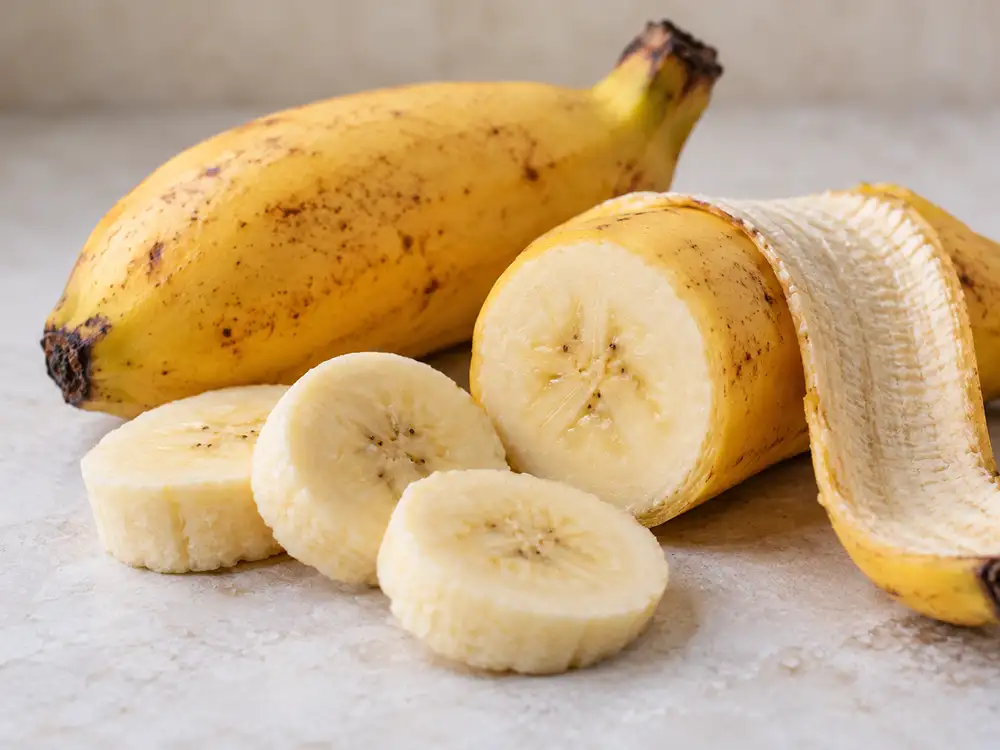
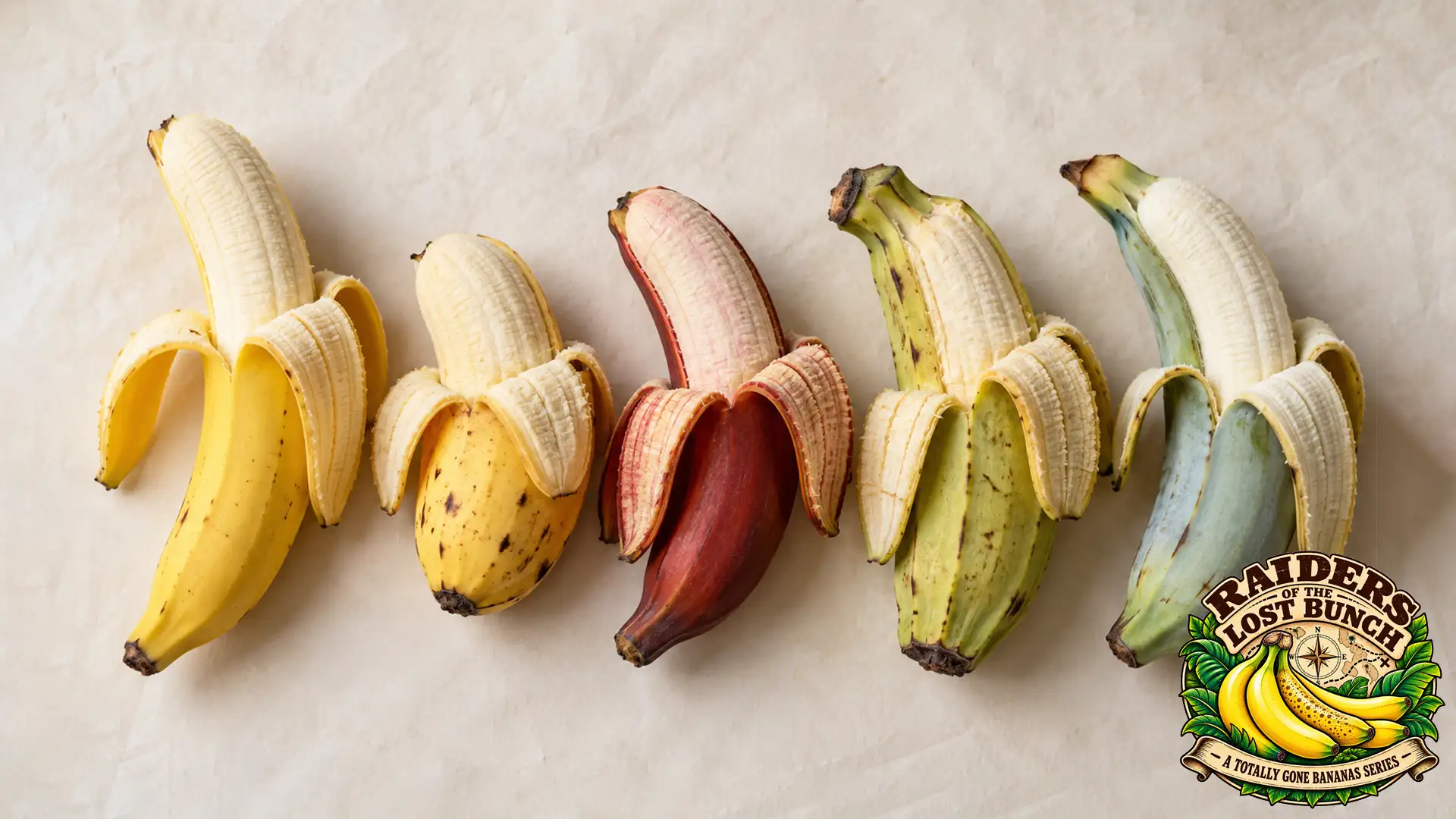
The Manzano goes by a pile of names: apple banana, silk banana, Latundan in the Philippines, where it's one of the most common bananas around. It's an AAB, shorter and chubbier than a Cavendish, with a thin peel.
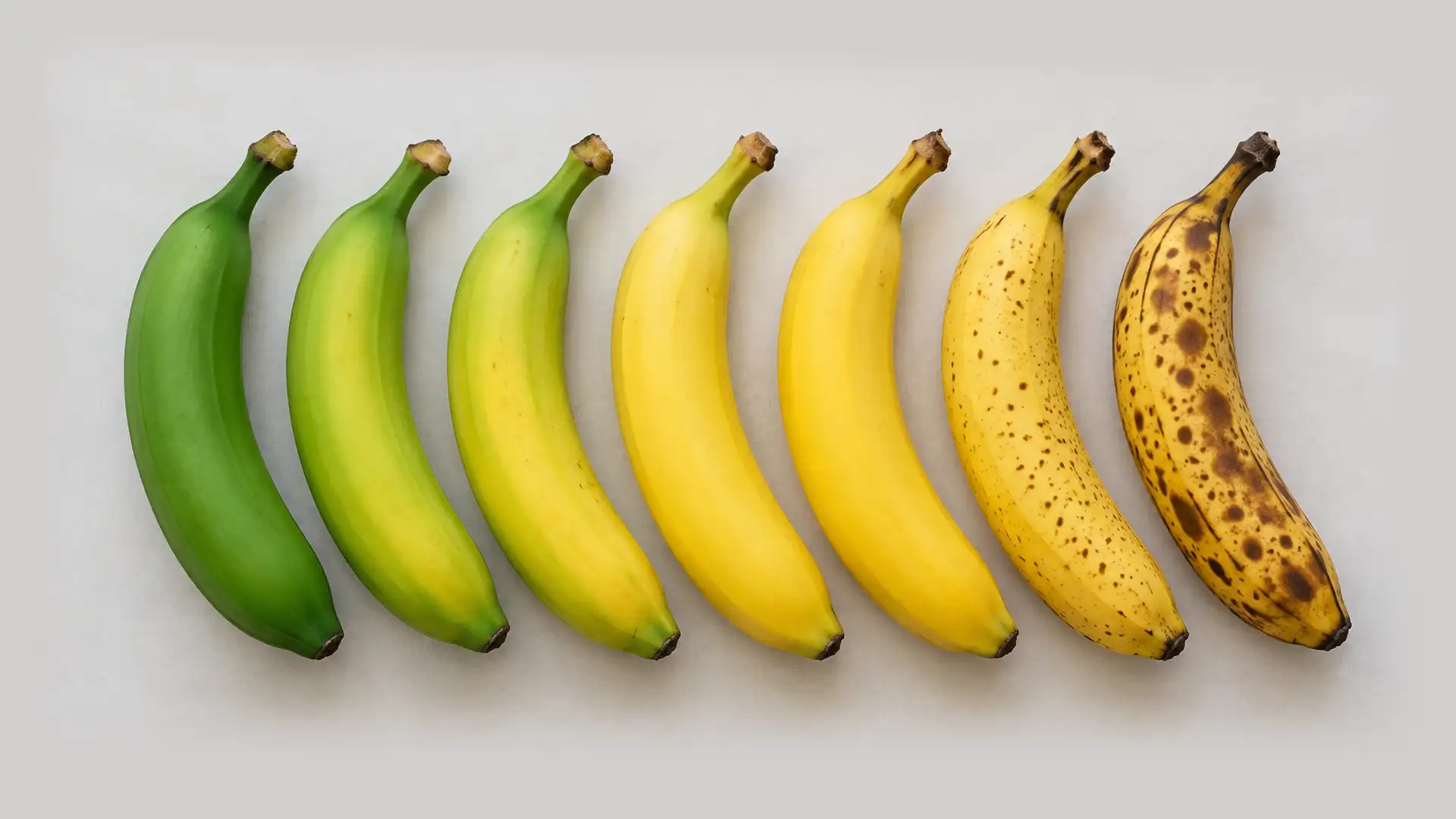
The first bite was firm and tangy, with a real green-apple brightness. Then the sweetness rolled in behind it. It's the first banana in this hunt with any acidity at all, and it made every other banana I'd eaten taste a little flat. One warning: it's at its best when the peel looks almost too far gone. Eat it while it's still mostly yellow and it's chalky and astringent.
Red banana
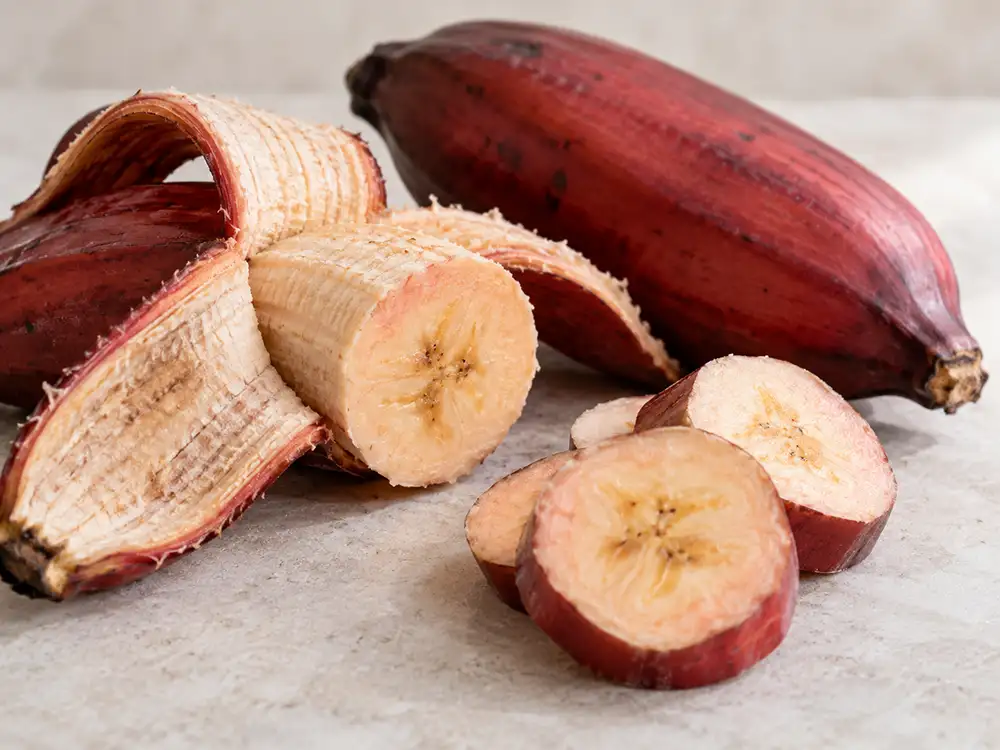
The red banana, also called Red Dacca or Red Cavendish, is technically still in the AAA club. But it doesn't eat like one. The peel ripens to a deep maroon, and the flesh is creamy with a faint pink blush.
It was softer and sweeter than a Cavendish, with a light berry tang some people compare to raspberry. I'd describe it as a Cavendish that went to art school. Judging ripeness is tricky: wait until the peel turns dark magenta and gives a little when pressed.
Burro
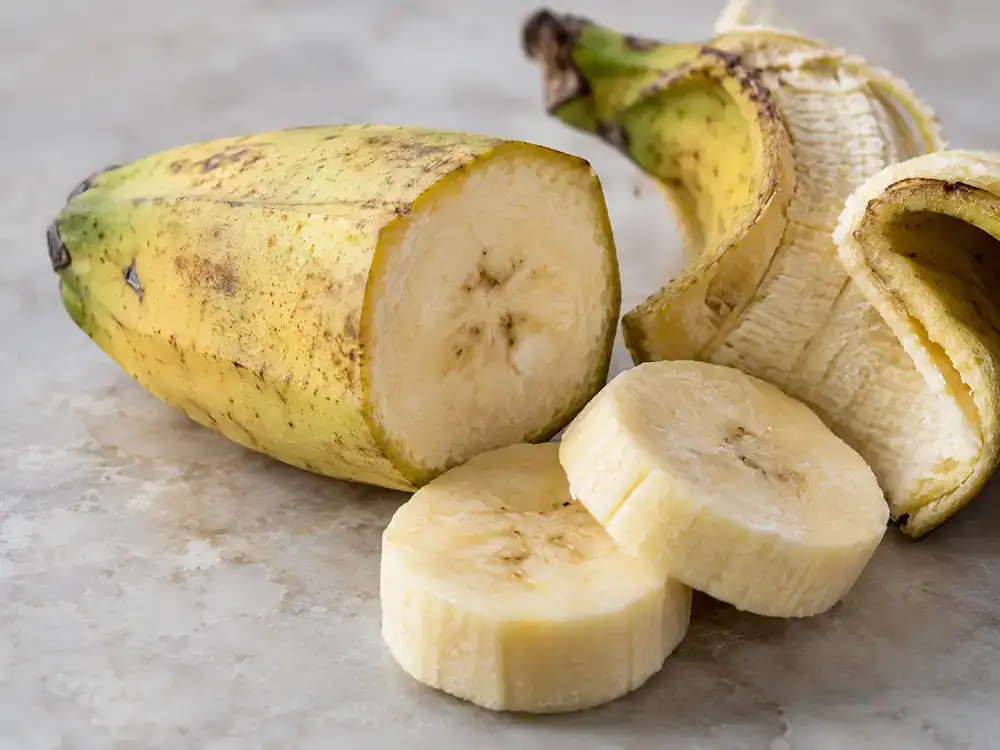
The Burro is stubby and almost square in cross-section, about 6 inches long. Ripe, its peel is deep yellow with black spots, and it hides a line of tiny edible seeds down the center.
This was the surprise of the batch. Fully ripe, it tasted like banana with a squeeze of lemon, firm toward the center and creamy at the edges. Underripe, it's sharp enough to make you wince. It's also great cooked, if you can stop eating it raw.
Blue Java (ice cream banana)
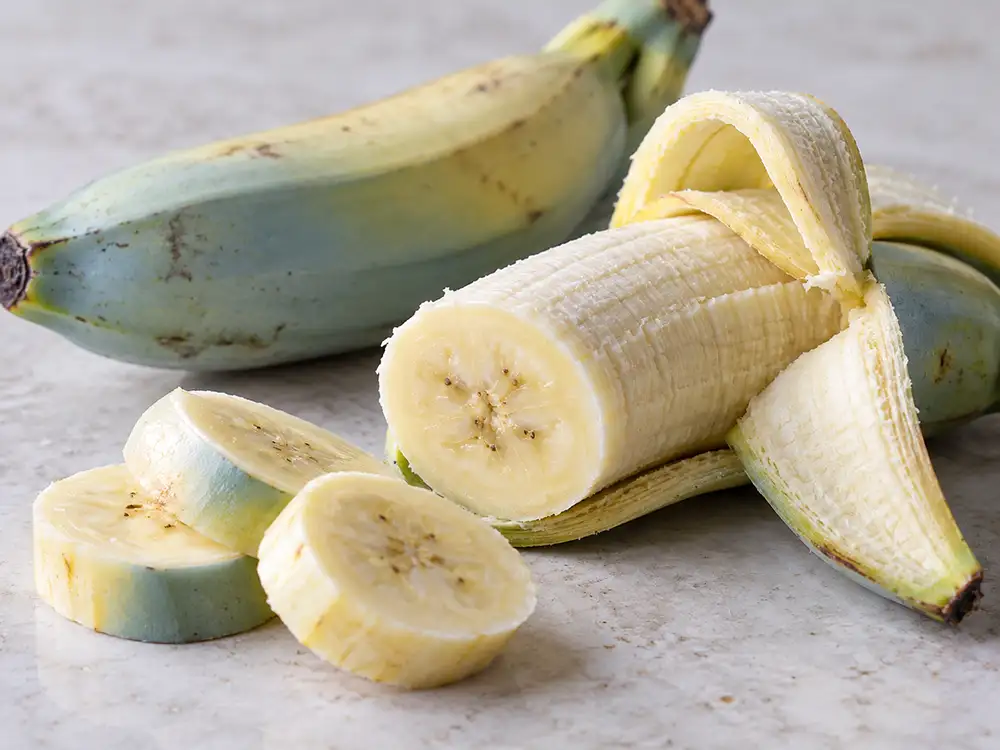
The Blue Java is the internet's favorite banana, and yes, it's real. It's an ABB from Southeast Asia, called Ice Cream banana in Hawaii. The unripe fruit has a silvery-blue look from a heavy waxy coating, and it ripens to pale yellow. It does not stay blue, whatever the viral photos say.
I haven’t been able to find any yet but I did notice that Miami Fruit has some for pre-order. Should I splurge and spend the money to try them?
Scorecard: The Series So Far
| Banana | Group | Sweetness | Texture | Complexity | Availability | Overall |
|---|---|---|---|---|---|---|
| Manzano | AAB | 7 | 7 | 8 | 5 | 8 |
| Red | AAA | 8 | 8 | 6 | 5 | 7 |
| Burro | ABB | 6 | 7 | 7 | 5 | 7 |
| Blue Java | ABB | N/A | N/A | N/A | N/A | N/A |
| Gros Michel (Part 2) | AAA | 7 | 8 | 4 | 1 | 7 |
| Cavendish (Part 1) | AAA | 6 | 6 | 3 | 10 | 5 |
All scores out of 10.
My verdict: the Manzano takes the lead. It isn't the creamiest or the sweetest, but it's the first banana that tasted like more than one thing. The sweet-tart balance is what the Cavendish has been missing all along. The red banana is the one I'd hand to a skeptic. Sweet, creamy and berry-ish is an easy sell.
How to find them- Latin and Asian grocery stores are the best bet for Manzano, red and Burro bananas. Burros are available year-round from Mexico.
- Big supermarkets sometimes stock red and "baby" bananas in the specialty produce section, usually near the plantains.
- Specialty growers and mail-order fruit shops, mostly in Florida and Hawaii, are where you'll find Blue Java. Expect to pay a premium and to wait for it to ripen.
- Let them ripen further than feels right. Almost all of these taste starchy and astringent when picked at Cavendish-yellow.
Next time on Raiders of the Lost Bunch: The Manzano is the leader, but I've barely scratched the surface. India grows more bananas than any other country, and hundreds of varieties most Americans have never heard of. In Part 4, I go looking for them.
Comments
No comments yet. Be the first.